
How To Fly
Simone Weil on anti-gravity

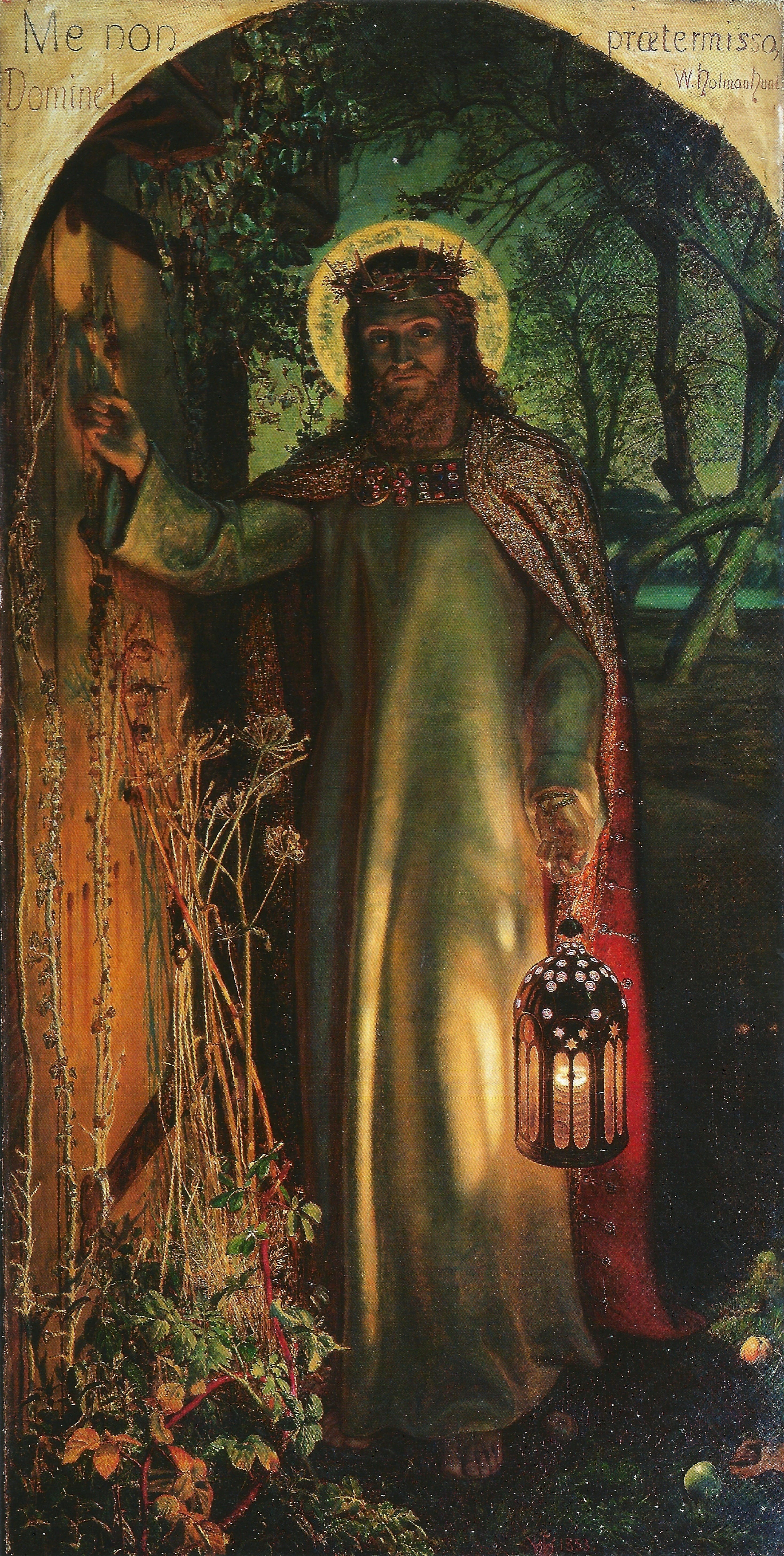
Below is an excerpt from Simone Weil’s Oppression and Liberty, pg 156
The beast has one doctrine — that of force. Certain Athenians, whom Thucydides quotes, expressed it crudely, with a marvelous precision, when they said to some wretches imploring their mercy: “We believe as concerning the gods according to tradition, and we know as concerning men from unquestionable evidence, that each one always, through a necessity of nature, commands wherever he has the power to do so.” It is clear that these Athenians were but recent coverts to the cult of the beast, the descendants of men who had been strangers to it; the true worshippers of this cult do not reveal its doctrine, otherwise than by action. To justify such action they invent idolatries.
The reverse of this doctrine, with respect to the divinity, is the dogma of the Incarnation. “Who, being in the form of God, thought it not robbery to be equal with God: but made himself of no reputation, and took upon him the form of a servant … and became obedient unto death…”
The beast is supreme on earth. The devil said to Christ: “All this power will I give thee, and the glory of them: for that is delivered unto me…” The description of human societies purely in terms of relationships of force accounts for almost everything. The only thing it leaves out is the supernatural.
The share of the supernatural here below is secret, silent, almost invisible, infinitely small. But it is decisive. Proserpina did not think she was changing her destiny by eating just one pomegranate seed; yet from that moment, for ever after, the other world has been her home and her kingdom.
This decisive operation of the infinitely small is a paradox which the human intelligence finds it difficult to acknowledge. Through this paradox is accomplished the wise persuasion that Plato speaks of, that persuasion by means of which divine Providence induces necessity to direct most things towards the good.
Nature, which is a mirror of the divine truths, offers us everywhere an image of this paradox. Catalysts, bacteria are examples of it. Compared with a solid body, a point is something infinitely small. Yet, in each body, there is one point which predominates over the entire mass, for if the point is supported the body does not fall; that point is the center of gravity.
But a point thus supported only prevents a mass from falling if the mass is disposed symmetrically around it, or if the asymmetry in it has certain proportions. Yeast only makes the dough rise if it is mixed with it. The catalyst only acts when in contract with the reactive elements. In the same way there exists certain material conditions for the supernatural operation of the divine that is present on earth in the form of something infinitely small.
The wretchedness of our condition subjects human nature to a moral form of gravity that is constantly pulling downwards, towards evil, towards a total submission to force. “And God saw … that every imagination of the thoughts of his [man’s] heart was only evil continually.” It is this gravity which forces man, on the one hand, to lose half his soul, according to an ancient proverb, the day he becomes a slave, and, on the other hand, to command always, according to the words quoted by Thucydides, wherever he has the power to do so. In the same way as ordinary gravity, it has its laws. When studying them, one cannot be too cold-blooded, lucid, cynical. In this sense, to this extent, one must be a materialist.
However, an architect not only studies falling bodies, but also the conditions for equilibrium. The trust knowledge of social mechanics implies that of the conditions under which the supernatural operation of an infinitely small quantity of pure good, place at the right point, can neutralize gravity.
Those who deny the reality of the supernatural truly resemble blind men. Light, too, exerts no pressure, has no weight; but by its means the plants and trees reach toward the sky in spite of gravity. We do not eat it; but the seeds and fruits that we eat would not ripen without it.
Similarly, the purely human virtues would not spring up out of man’s animal nature without the supernatural light of grace. When man turns away from this light, a slow, progressive, but relentless decomposition finally subjects him altogether, right in the very depths of his soul, to the sway of force. As far as it is possible for a thinking creature, he becomes matter. In the same way a plant deprived of light is gradually changed into something inert. […]
There are not two methods of social architecture. There has never been more than one. It is eternal. But it is always the eternal which calls for a truly inventive effort on the part of the human spirit. This consists of disposing the blind force of social mechanics around the point that also serves as center for the blind forces of celestial mechanics, that is to say the “Love which moveth the sun and the other stars.”
It is certainly no easy thing, either to conceive in a more precise manner or to accomplish. But at any rate the first condition for moving in this direction is to let one’s thoughts dwell on it. It is not one of those things that can be obtained by accident. Maybe one can receive it after desiring it long and persistently.
The imitation of the order of the world was the great conception of pre-Roman antiquity. It should also have been the great conception behind Christianity, since the perfect model proposed for each man’s imitation was the same being as the Wisdom ordering the universe. And in fact this conception did stir subterraneously the whole of the Middle Ages.
Today, after being bemused for several centuries with pride in technical achievement, we have forgotten the existence of a divine order of the universe. We do not realize that labor, art and science are only different ways of entering into contact with it.
If the humiliation produced by unhappiness were to rouse us, if we were to re-discover this great truth, we should be able to put an end to what constitutes the scandal of modern thought, the hostility between religion and science.