
An Interview with O.G. Rose
On Where to Begin, Time as a Friend, Belonging Again, Philosophy, and Personal Recommendations


Where should one begin with your work and publications?
Our collection Thoughts would be a great place to start: it’s an assortment of a hundred very short pieces on a wide range of topics, giving readers a sense of how Michelle and I think about things and approach philosophy. “Ideas Are Practically Eyes” is the opening piece, and it explains why we think theory and practice cannot be separated (a pragmaticism that disregards philosophy will turn out not to be very pragmatic at all). Second Thoughts and Third Thoughts are similar, though the essays are typically longer. Michelle likes to say that the Thoughts books are each like a philosophical box of chocolates, a description I love.
If you enjoy Thoughts, I would then suggest The Philosophy of Glimpses, which we wrote with Thomas Jockin and Javier Rivera. That is a very short book that traces out a major arch in our thinking, which much of our work unpacks and elaborates on. After Glimpses, readers could move into either Belonging Again (if you’re really interested in issues involving sociology and economics) or The Conflict of Mind (if you’re interested in mental models and thinking about thinking). Both of those books are the start of a series.
Alternatively, we have a short story collection called Under the Wing that Michelle and I worked on for a decade. Creative Writing is for what we started “O.G. Rose,” which means “Opperman Garner Rose” (our names combined). Fiction is our first love.
How can we develop a better relationship with time?
I’d start by realizing that time is more real than space and that quality time is more important than having time. When I was young, I’d say to myself, “your opponent is time,” meaning that I had to live in such a way that I would not be worn down by the years, avoid boredom, fill each moment with “intrinsic motivation,” plan my work life in a manner that took the reality of time seriously, and more. I need to unpack all of that, but I think that if you take seriously that you will love your life to the degree you love the time you have, you come to see time as the most important resource on offer. Furthermore, you come to think about everything you do in terms of how it makes you experience time: friendship should be when hours pass by and you don’t realize it; work is meant to be characterized by a full engagement where you don’t look at the clock wondering how much longer you have to keep working; marriage is the transformation of a space into a gathering of history and roots; and so on. Your living is your time.
How you develop a better relationship with time is a great question, and I would say to start you need to stop doing the things that make you want time to pass. If that is your job, you need to start thinking about transitioning to a new job, or building up an alternative opportunity, that will change your relationship to work: it might take a few years, but I would gradually build a smooth “off-ramp” that won’t put you in financial peril. If you become serious about that, you’ll start changing your relationship to free time today: instead of thoughtlessly consuming entertainment, you’ll use that time to research, go to community events to build your social network, and the like.
Second, seek virtue: if your life is full of vice, you’re going to spend a lot of your time trying to hide things, repress truths, live in self-denial, suffer guilt, and so on. In vice, you cannot trust time: you might have a moment or day here and there where you feel fine, but then suddenly the consequences of the vice show up and your life tailspins. Your relationship to time will be nervous and worried. You’ll spend your time finding a condition where you convince yourself the vice won’t show up and keeping yourself there—a prison. Vice leads to a temptation of equilibrium and inaction.
Though I could say more, lastly, I’d say seek beauty, which is tied to seeking friends and working on your health. Thomas Jockin has courses and work on all three of those topics—I’d highly suggest checking him out.
What is one thing you believe that no one else does?
Beauty can save the world? No, that’s Dostoevsky. That irony is ontological? Kind of Kierkegaardian…It’s a great question, and maybe it’s that I think there is a real and meaningful way to deal with “the problem of scale” without really trying to scale, that it’s possible for us to make the world a better place without having a set idea of what it means to make the world a better place, that we can create the conditions of possibility for the average person to become more fully human without trying to change them—and stuff like that which sounds contradictory and impossible. It’s the main work of Belonging Again, what I call “the new address,” and it’s the basis of my hope in meaningful transformation of the sociopolitical and economic that doesn’t fall into the major mistakes of the 20th century.
“…it’s possible for us to make the world a better place without having a set idea of what it means to make the world a better place, that we can create the conditions of possibility for the average person to become more fully human without trying to change them'“
Is philosophy possible for everyone? Even for those without the temperament?
I believe so, because everyone can think and philosophy can start with thinking about thinking. Yes, because everyone experiences what is in front of them and philosophy can start with trying to experience more and better. Yes, because everyone is in relationships and philosophy can start when we realize our ideas of what is good for a relationship can be what destroy it.
Now, I think when we ask if everyone can do philosophy, we mean something like if everyone can read Plato and enjoy it. No, but that’s not all philosophy is or the only way into it. In fact, I would say it’s not even the best way into it: the best way to get into philosophy is to be in wonder of how something went so wrong and/or how something could be so wonder-full. Often, when people start philosophy, they unintentionally start with the history of philosophy, which is not at all the best way in. That can kill the interest—fast.
In my view, don’t start philosophy by starting with a philosopher, but instead start with a topic that you think has real stakes. Notice I said “stakes” versus “what interests you”: being interested in something is great, but if you think something has stakes, you’ll be both interested in it and motivated to think about it. Furthermore, you’ll see the benefits philosophy can have for your life when it helps you deal with these stakes well. If you focus on something you’re only interested in, it might feel like a distraction from the stuff you should be doing.
“Yes, because everyone is in relationships and philosophy can start when we realize our ideas of what is good for a relationship can be what destroy it.”
If you could recommend one fiction writing, one non-fiction writing, one movie, one painting, and one piece of music, what would they be and why?
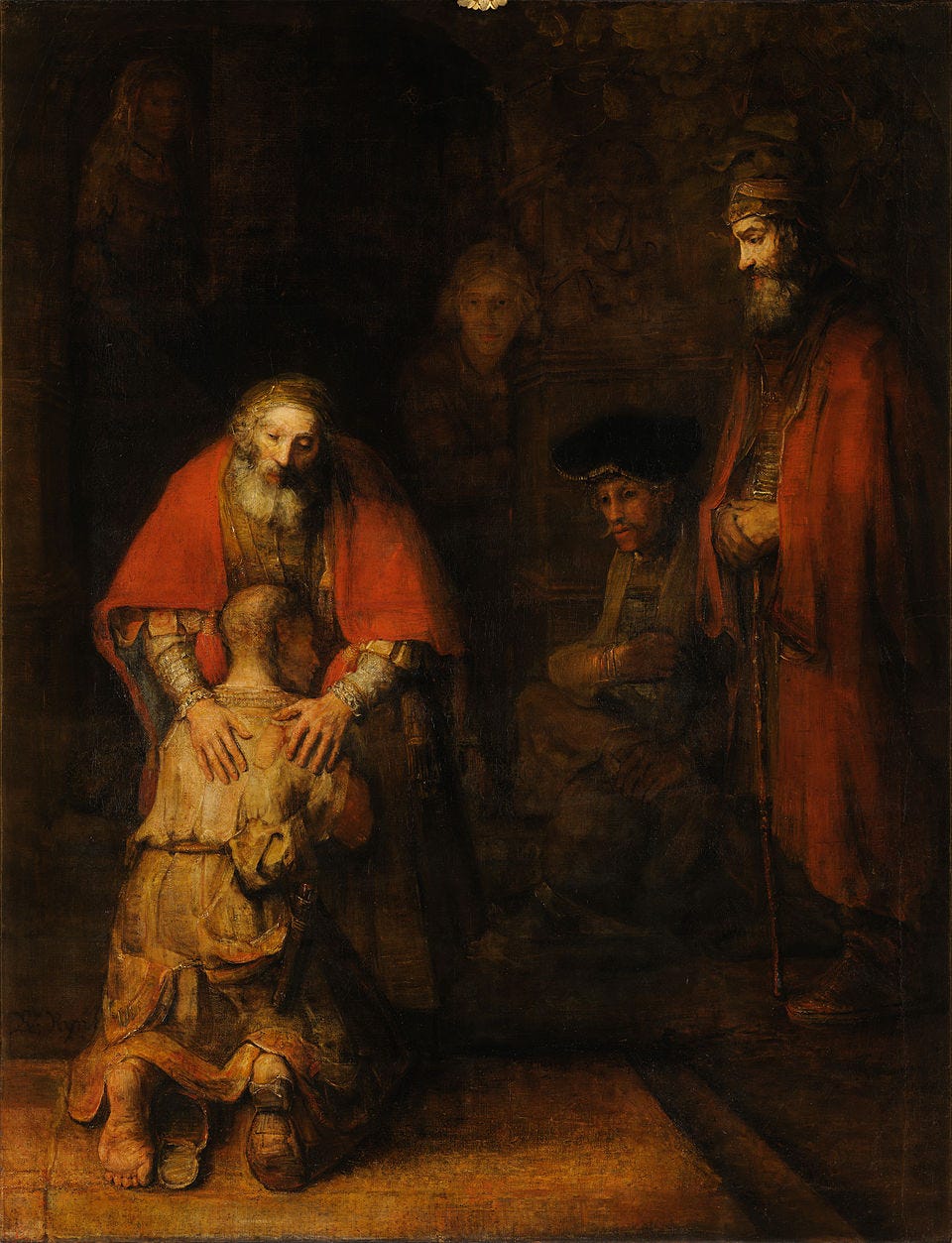
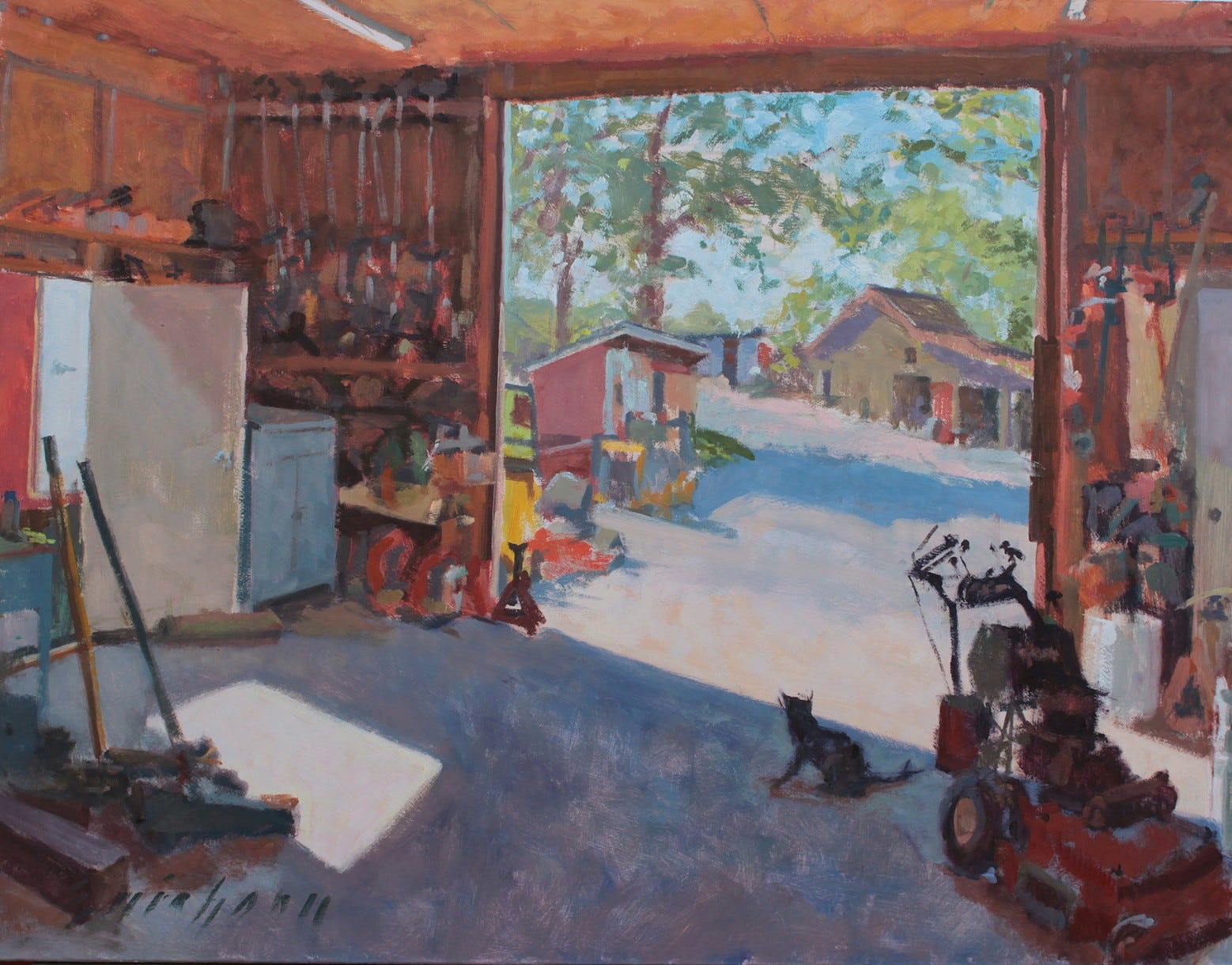
What a question, and I’m going to answer but I’m not sure if I can give adequate justification. But here we go: for fiction, Flannery O’Connor, because I think she might uniquely unveil the power of short stories; for non-fiction, Hegel, which I know is cruel and unusual, and I hated Hegel for years, but Cadell taught me to know better and I’m convinced Hegel is in a sense yet-to-be-read and is a true paradigm shift our world needs. For movies, I think about Memories of Murder a lot, which I had a chance to talk about at The Last Picture Show film festival a few years back. And I do love the paintings of my friends, Christian Ford and James Dean Erickson, and also Nouwen got me amazed in The Return of the Prodigal Son by Rembrandt. (Would pausing a Miyazaki film anywhere count?) And regarding piece of music, I had Max Richter’s Infra 8 on loop for an entire year as I wrote my first novel, and then I had Funeral Canticle by John Tavener on loop for about two years working on the next novel. Yea…I like looping music…
 | A guest post by
|